
United Kingdom // 2020
Stage Precision Software Key to Green Space Dark Skies Outdoor Light Choreography
OVERVIEW
Green Space Dark Skies is one of 10 creative projects that took place across the UK from March to October 2022 as part of the UNBOXED initiative: a once-in-a-lifetime celebration of creativity shaped across science, technology, engineering, the arts, and mathematics.
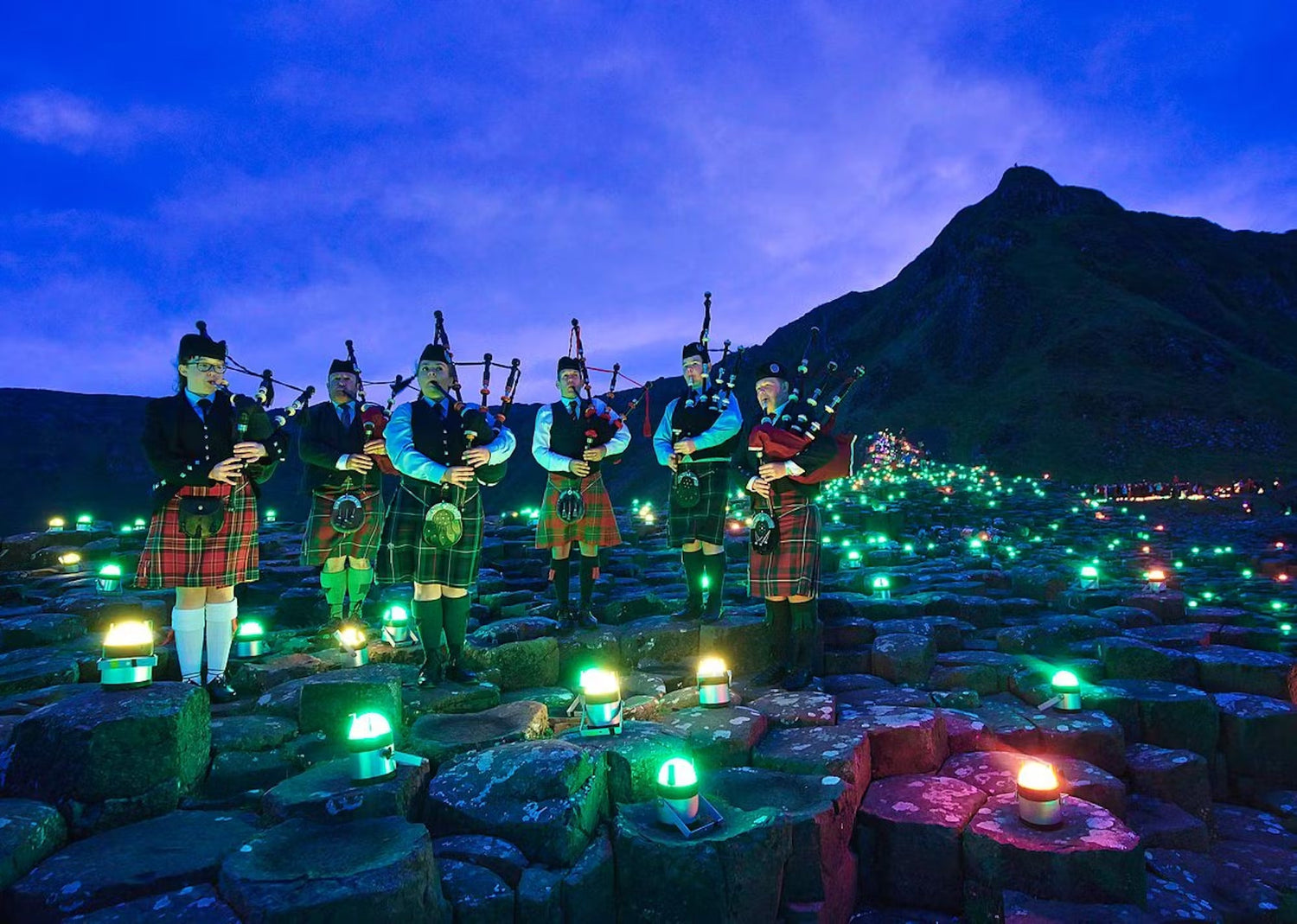
The Green Space Dark Skies project, which was inspired by the 90th anniversary of the 1932 Kinder Scout Mass Trespass, invited people from all walks of life to become ‘Lumenators’, carrying specially developed programmable, wireless, low impact lights around some of the UK’s most iconic National Parks and Areas of Outstanding Natural Beauty after dusk.
The lights themselves – developed technology partner, Siemens – were fully trackable and programmable thanks to Stage Precision software, which allowed the designers to create digital choreography using the thousands of participants as their own living, breathing pixels on some of the country’s most beautiful landscapes.
PROBLEM
Green Space Dark Skies required a level of pixel mapping and coordination that no media server would be capable of, according to Pod Bluman of visual specialist, Bluman Associates.
First, the GPS information from each of the lights needed to be recorded, then displayed visually as a 3D map, before the team could apply real time content onto those ‘pixels’ using Notch. Bluman contacted Stage Precision (SP) to see whether its software could be customised to perform such a specific task and, as always, SP was more than up to the challenge.
SOLUTION
SP developed a completely new and unique version of its software for Green Space Dark Skies, working alongside Bluman to successfully meet the project’s specific requirements. Even with the relatively simple pieces of choreography finalised on the day of each walk with event producer Walk the Plank, a high level of intricacy could still be achieved. The team could rest assured that each pan and colour shift could be done with confidence because the lights would always be where the SP interface said they were.
“This can only be achieved because it’s the technology that’s doing the synchronisation and coordination rather than the people themselves,” said Bluman. “There were a few little tweaks needed at the beginning, but we’ve been using it in anger on shows since March and it’s worked really, really well.”
For the duration of the project, the software development process went hand-in-hand with the development of the lights themselves, so all of the necessary testing and improvements could be implemented without delay